

kabin
Tarih: Date -
kabin
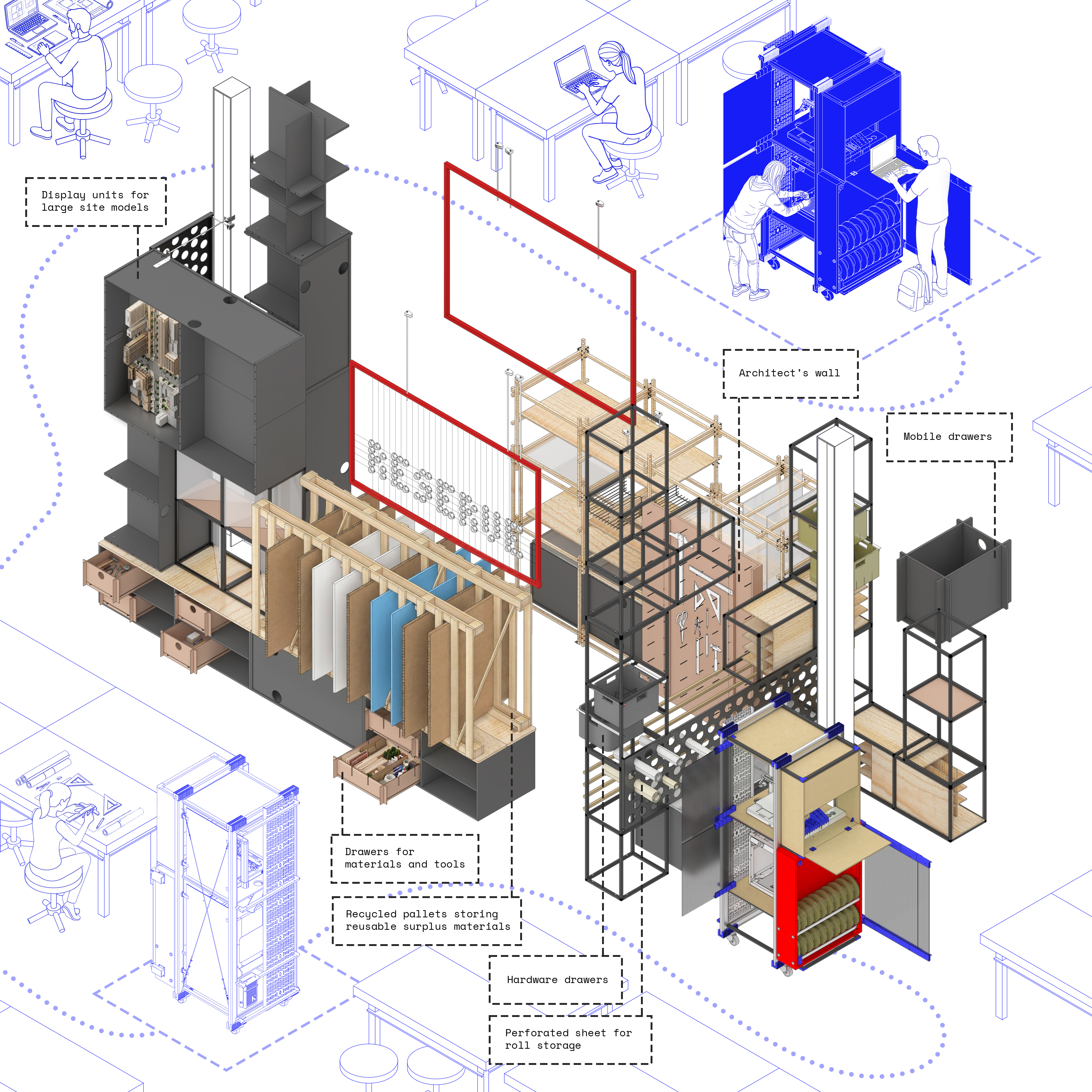
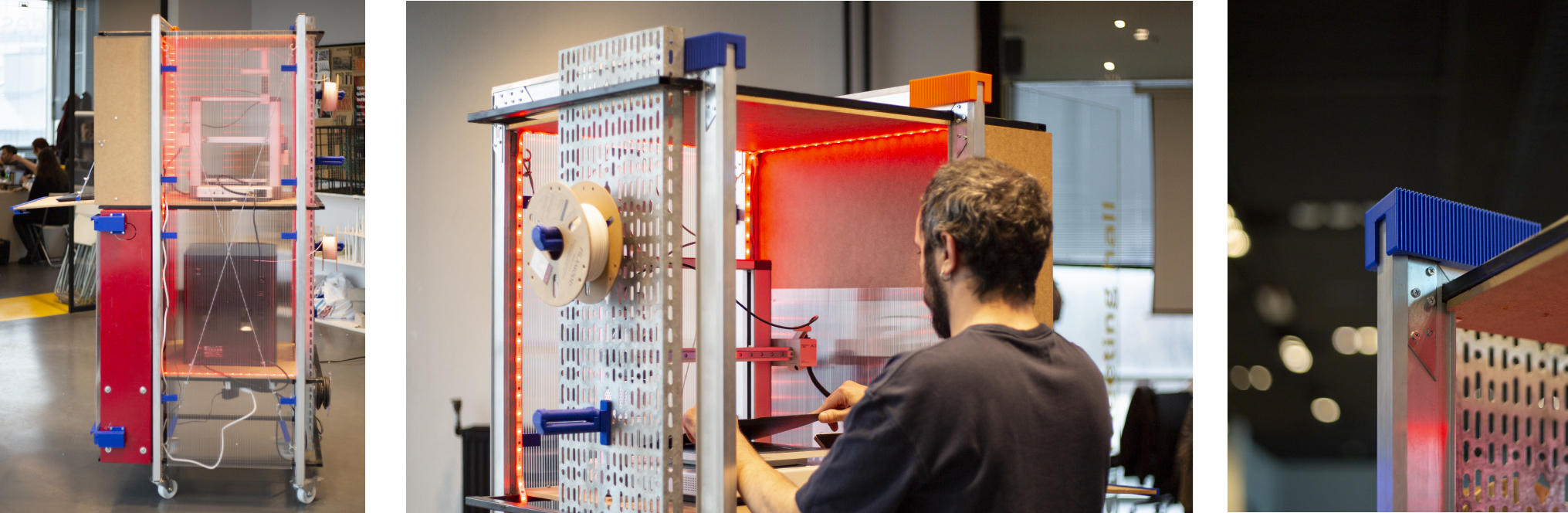
The kabin project was developed in 2025 at TEDU Department of Architecture as a 1:1 scale application. Conceived as a mobile and modular 3D-printing station, kabin establishes both a physical and pedagogical framework for reserving, storing, reactivating, and producing materials within architectural education. Designed and constructed through a collective hands-on workshop series, the project resulted in a modular, transportable fabrication hub that provides a flexible production space for design studios.
The project was initiated through an open call that brought together undergraduate and graduate students in a shared learning process. Kabin represents the second round of an ongoing pedagogical experiment that began with the reserve project.
First Round: reserve
In the first round, students collectively designed and constructed reserve, a material station that enabled the sharing and reuse of leftover materials from studio work. With the exception of basic joints and fasteners, only materials collected from existing storage spaces across the campus were used. This constraint became a key pedagogical driver, encouraging students to assess material availability, negotiate priorities, and determine collectively how architectural intervention could emerge from what was already at hand.
Second Round: kabin
In the second round, the framework expanded by introducing material production into the system itself. kabin was developed as a mobile 3D-printing station, again constructed exclusively from materials harvested from campus storage spaces. Even the necessary joints and connectors were produced on site using the 3D printers housed within the station. This recursive logic—where the structure generates components required for its own continuation—reinforced an understanding of architecture as an adaptive and responsive practice.
The project unfolds through four interconnected phases:
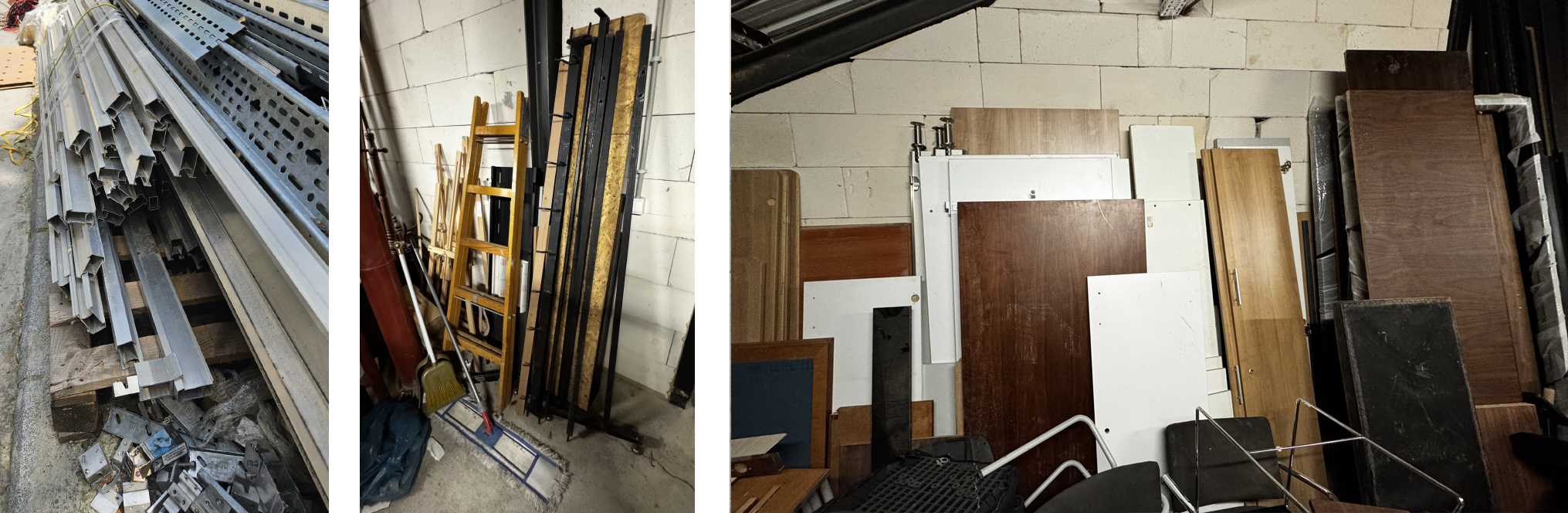
The pedagogical process begins with a collective material inventory in which students harvest leftover materials from campus storage spaces. These materials are evaluated, measured, cleaned, and documented, raising awareness of their properties, dimensions, and conditions, and reframing scarcity as a starting point rather than a limitation.
The process then moves into the design phase, where students develop spatial proposals through hands-on experimentation, allowing ideas to evolve in response to material behavior and unforeseen constraints. Construction details are tested and refined, and in the case of kabin, joints and components are designed to be produced through 3D printing, enabling the structure to generate its own elements.
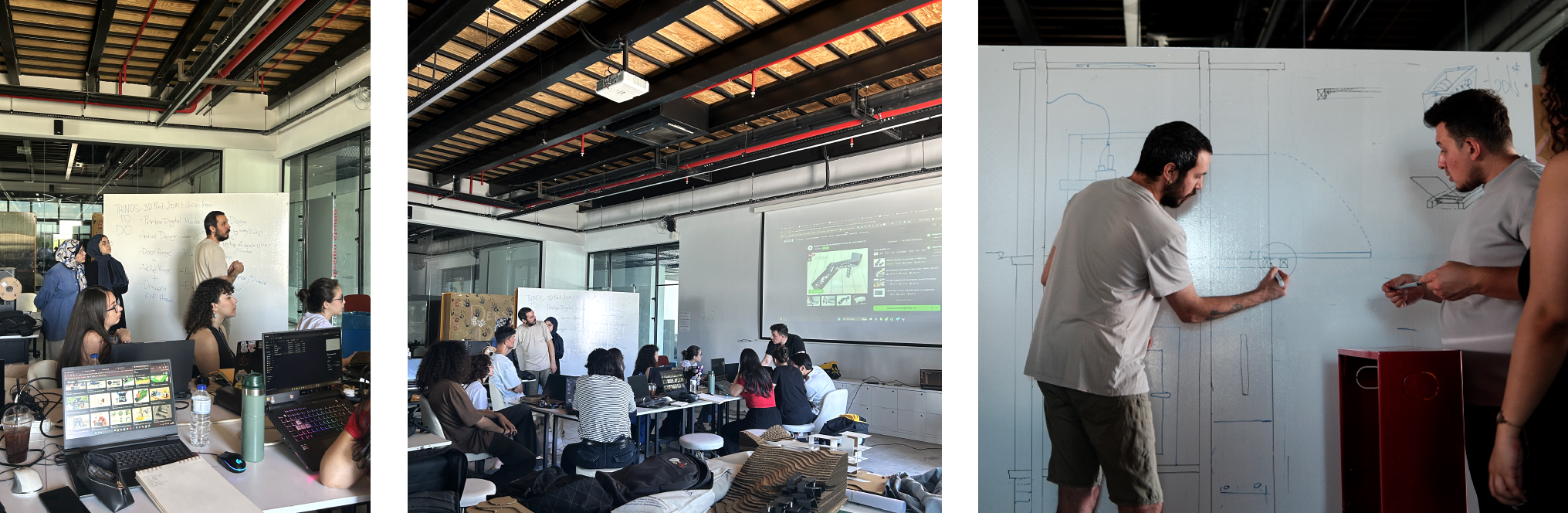
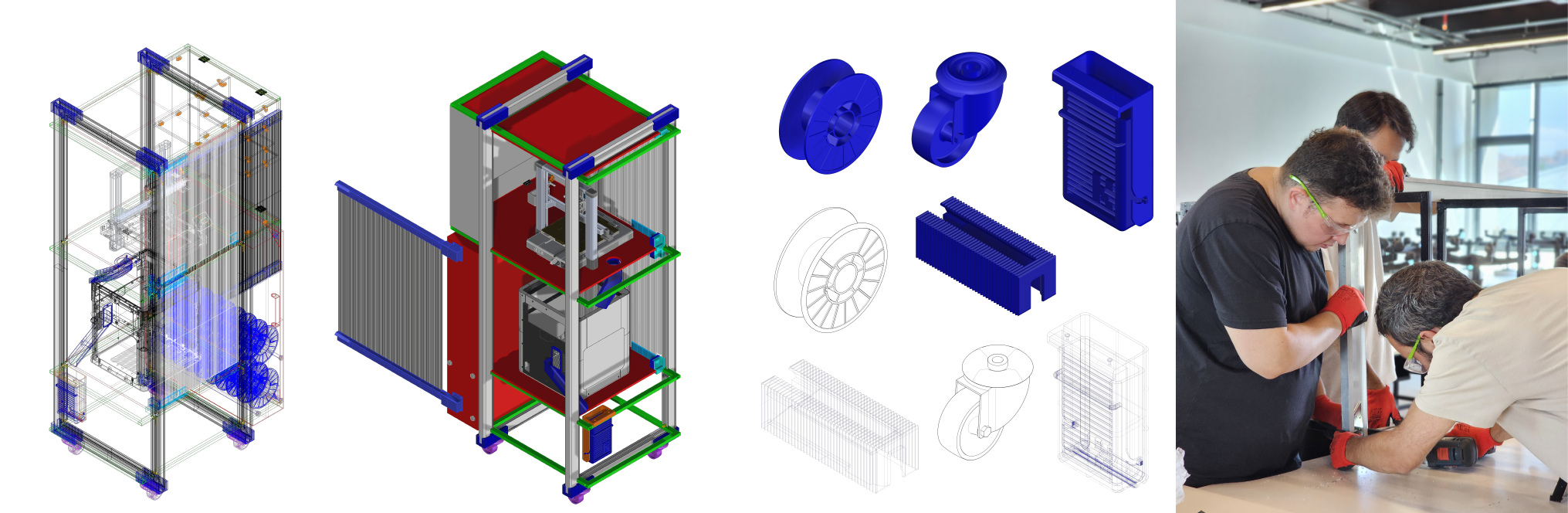
This is followed by the collective assembly phase, during which the designed components are constructed on site and students incorporate improvised and ad-hoc solutions in response to emerging conditions, gaining experience in collaborative problem-solving and real-time decision-making.
The process concludes with a reflective phase embedded within the course structure, where students critically analyze their experience through seminars, readings, and discussions, situating their work within broader theoretical debates on learning by doing, material reuse, and contemporary architectural practice.
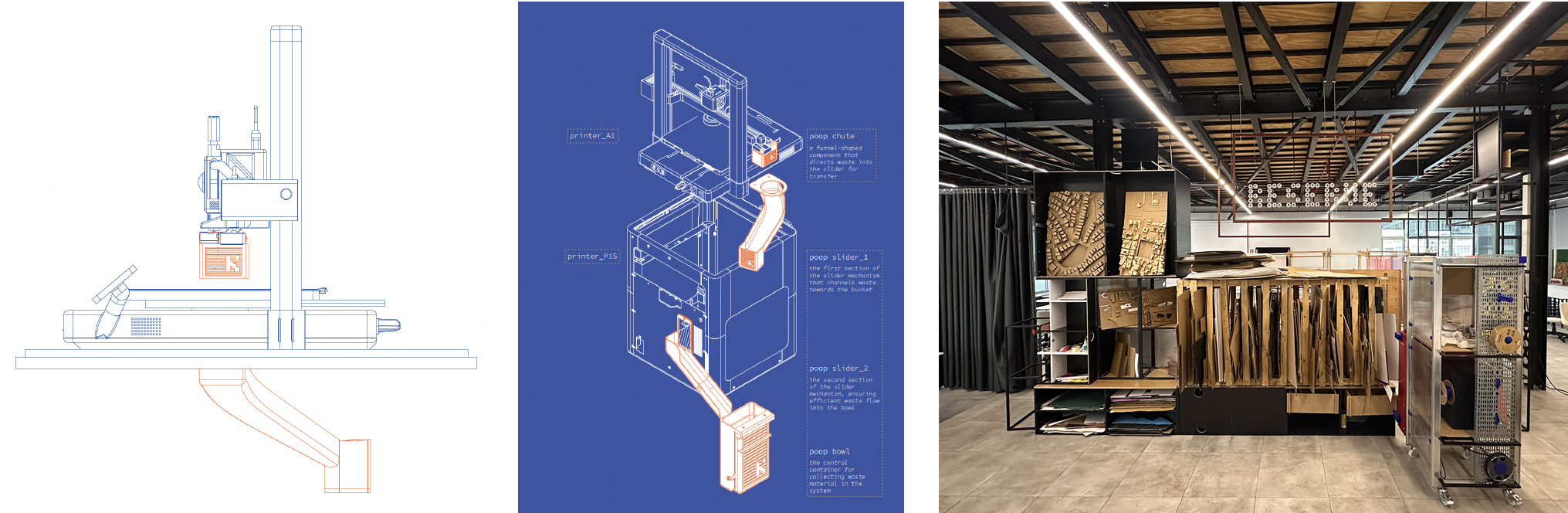
In both rounds (reserve and kabin), the primary objective was not the production of architectural objects, but the reinforcement of collective learning through action. Students learned to work with constraints, to recognize the agency of materials, and to engage in shared decision-making processes. The resulting projects remain in active use and continue to support architectural education, embedding reuse, collaboration, and adaptability into everyday practice. As such, the project demonstrates how learning by doing can operate as a sustained pedagogical framework that prepares students to address urgency, complexity, and unpredictability in contemporary architectural practice.
Coordinators: Çağrım Koçer, Utku Coşkuner
Participants: Baray Özyurt, Deniz Doğru, Ece Elif Çetindağ, Elif İrem Almali, Eray Edip Arica, Hasan Dinçkan, İrem Deniz, Kanar Hussein Hama Ali, Mehmet Ali Görmüşoğlu, Nazli Doğa Erdoğan, Şevval Güldür, Sude Naz Özel, Zehra Didar Kalkan