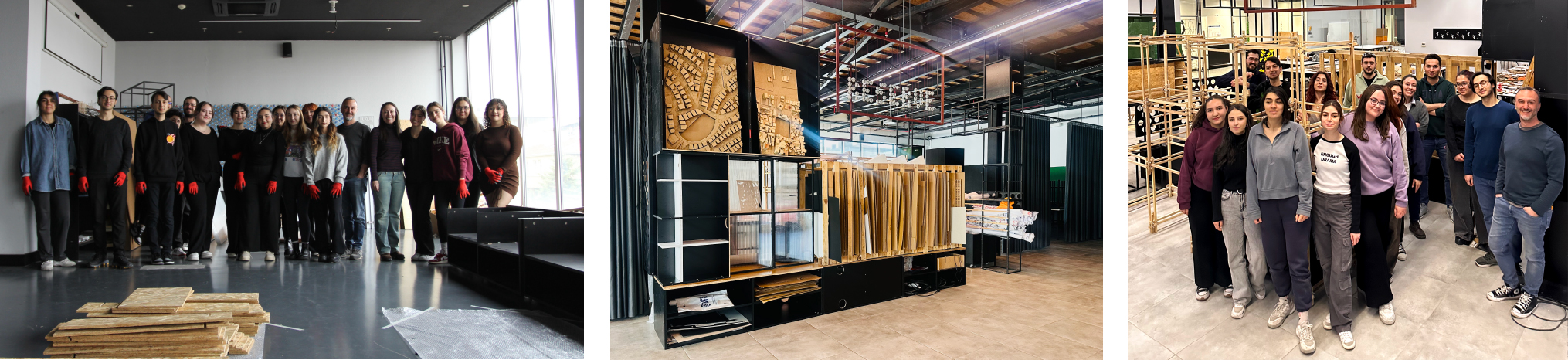

reserve
Tarih: -
The reserve project was developed in 2025 at TEDU Department of Architecture as a 1:1 scale application. The project aims to establish both a physical and a pedagogical framework for reserving, storing, and reactivating materials within architectural education. The term “reserve” refers simultaneously to a spatial repository and to an educational act of embracing and producing materials in anticipation of future use. Initiated through a common open call involving students from all levels of architectural education, the project brings together undergraduate and graduate participants in a shared learning process. The pedagogical experiment unfolds through four interconnected phases.
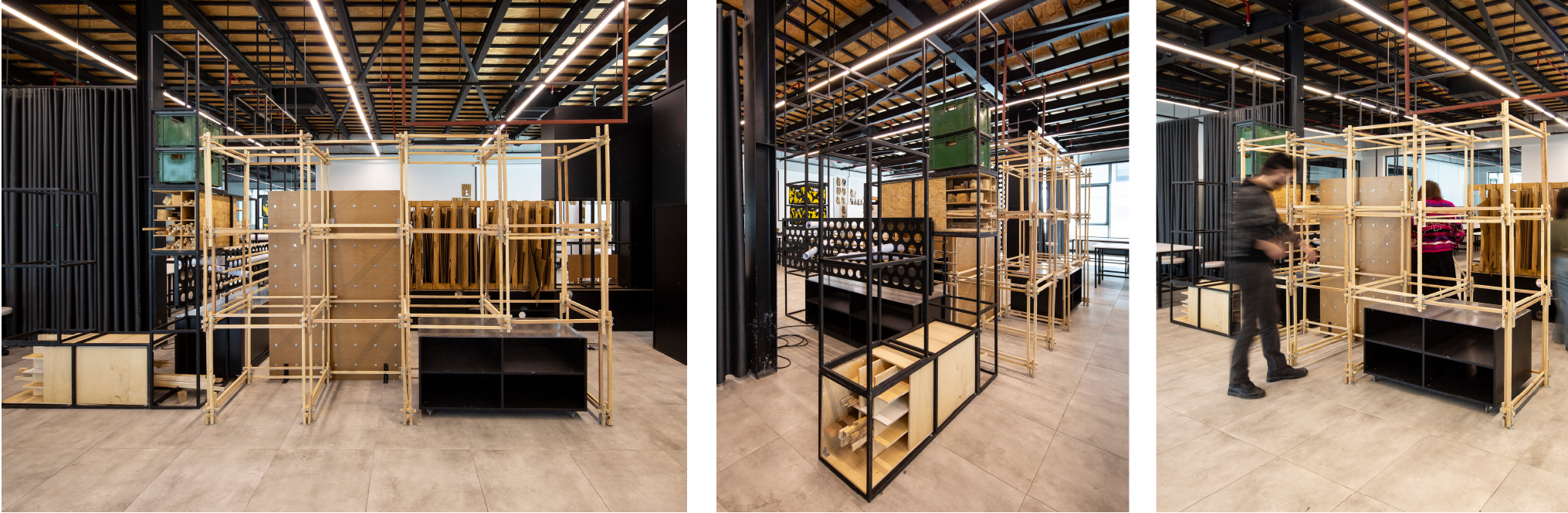
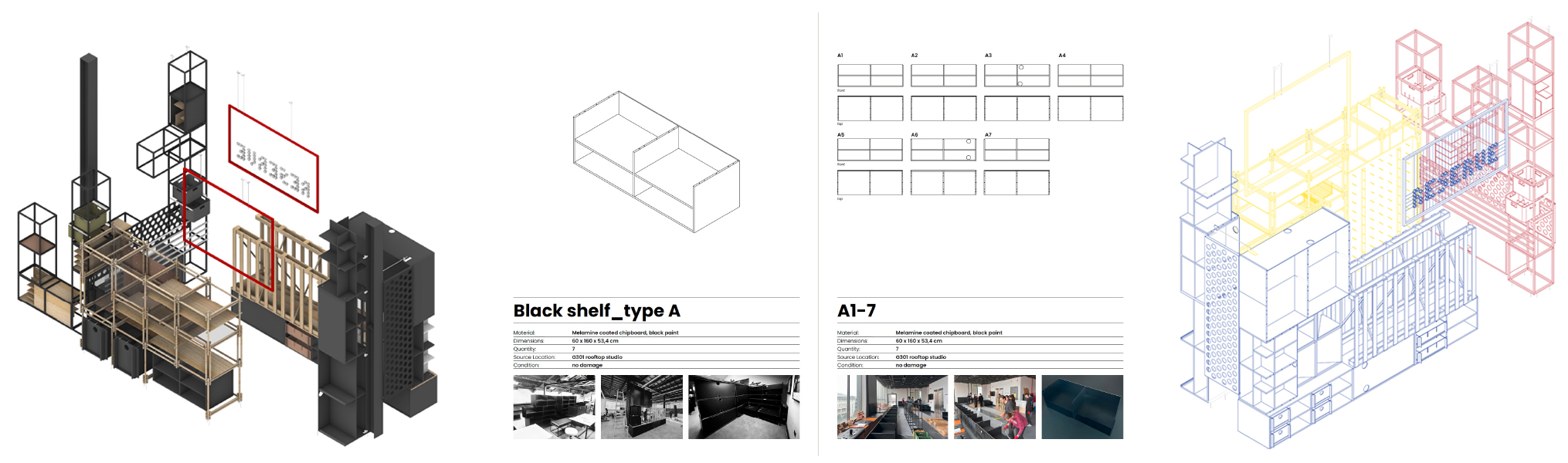
The first phase consists of a material inventory—scavenge—initiated through a collective call to harvest leftover materials from storage spaces across the campus. This phase establishes a shared awareness of availability and limitation, framing material scarcity as a starting point rather than a restriction. Through the evaluation of the potential of found materials, the collected elements are measured, cleaned, and documented, allowing students to become familiar with their dimensions, properties, and conditions.
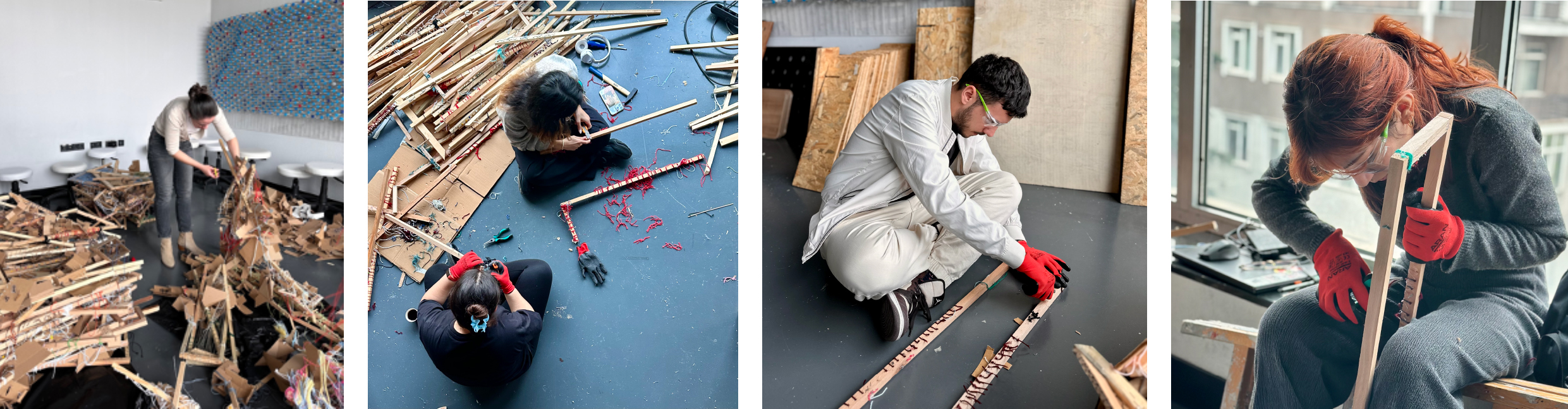
The second phase focuses on the design process, during which students collectively develop spatial proposals through hands-on experimentation. Design ideas are continuously adapted in response to material behavior, uncertainty, and unforeseen constraints. The development of specific construction details—closely informed by material properties—leads to the definition of the assembly process, which is finalized within a limited timeframe.
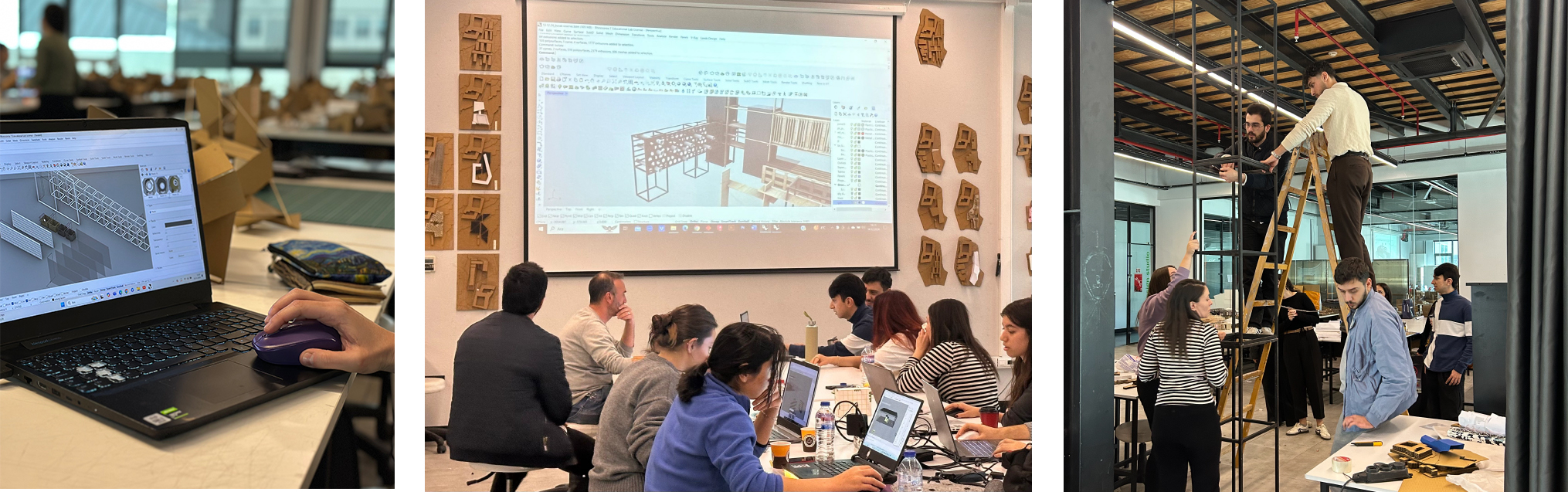
In the third phase, the designed components are assembled collectively on site. During this process, students reflect on the knowledge produced in the earlier phases and incorporate improvised and ad-hoc solutions in response to emerging conditions during construction. Technical staff accompany several stages of the construction process, enabling students to collaborate with and learn from other actors, and to experience architectural production as a collective and situated practice.
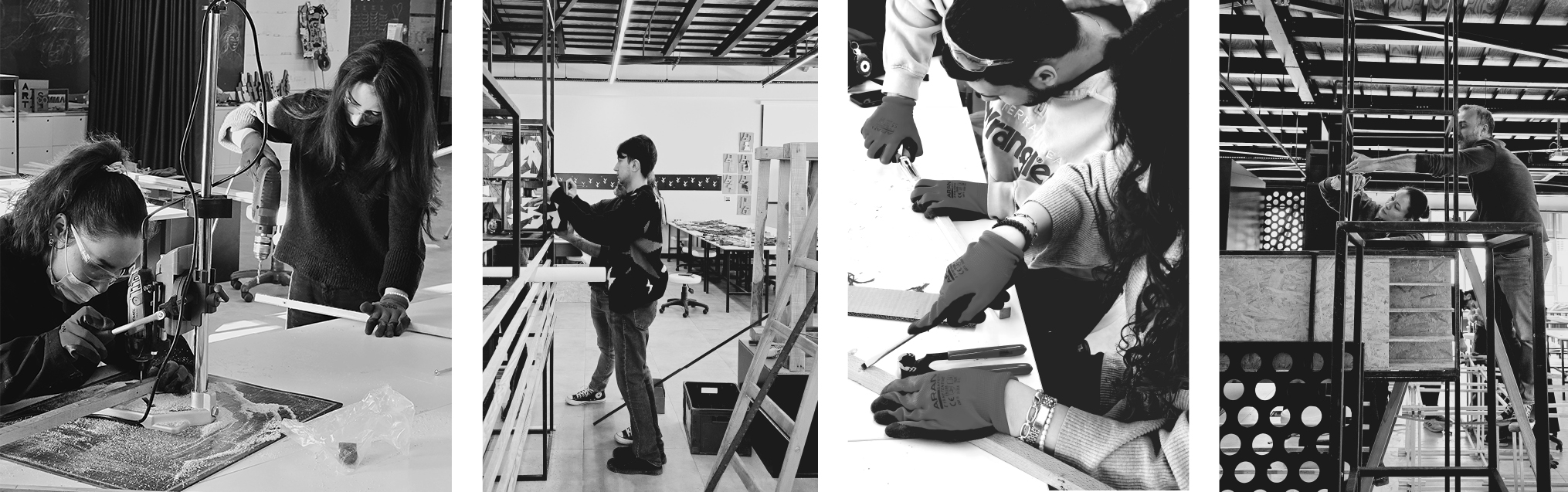
The fourth phase is an in-course component, in which students critically reflect on their experience of making and working together. Through seminars, readings, and discussions, they engage with relevant literature, theory, and documentation by examining their own work in relation to broader pedagogical and architectural debates. This phase connects action with reflection, enabling students to articulate the knowledge produced through practice and to situate their experience within an academic and theoretical framework.
 Coordinators: Onur Yüncü, Seray Türkay
Participants: Betül Kayadan, Burak Işılak, Çiğdem Çelebi, Deniz Doğru, Duru İçli, Gonca İpek Küçük, Hamza Olgun, İdil Eren, Karya Karamustafa, Leyla Shirinova, Nurbetül Yılmaz, Öykü Kılıçkan, Semih Demirbilek, Sena Nur Mantaş, Şevval Güldür.